Tuesday, 29 May 2012

Cardiff

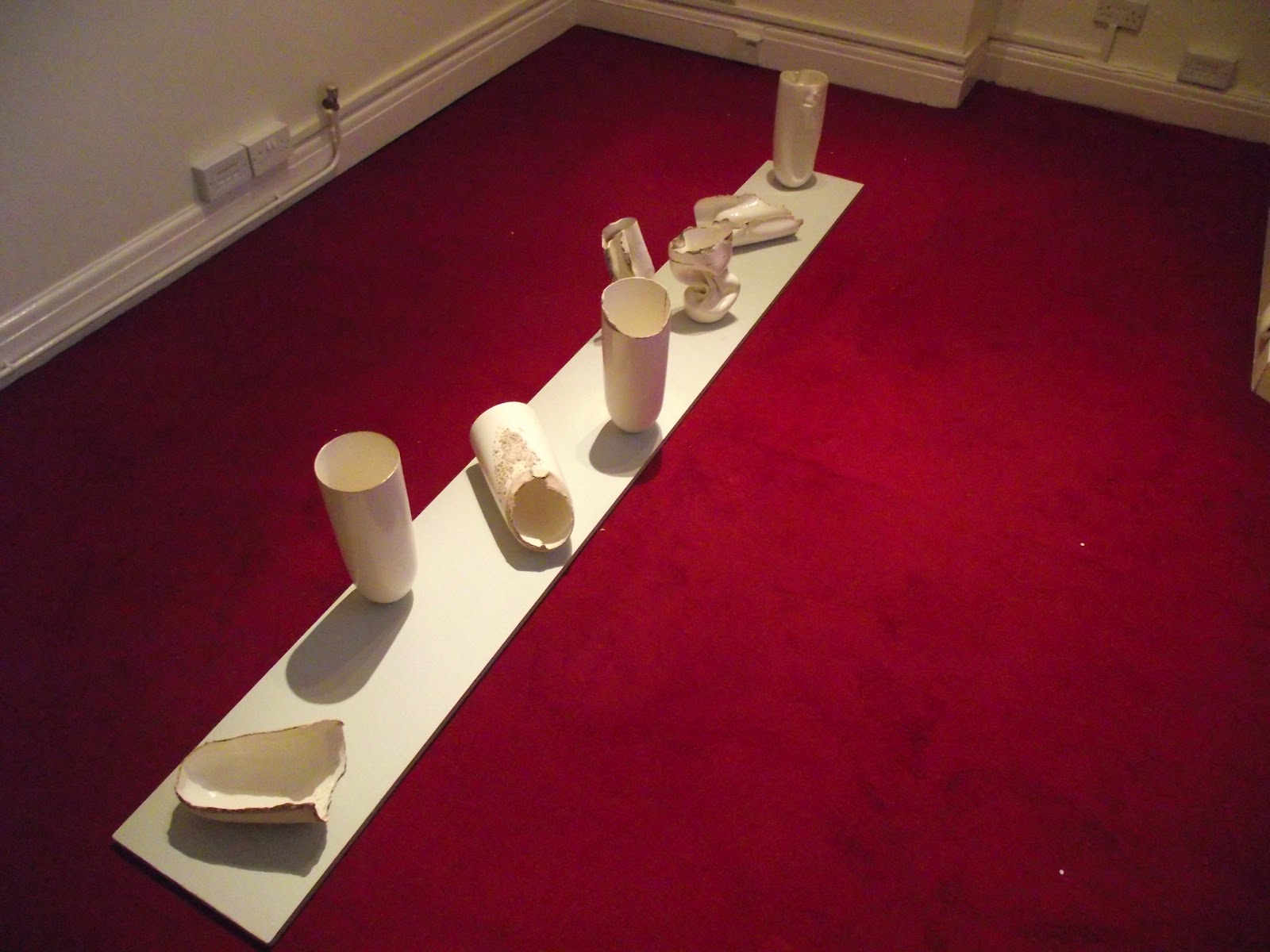
So I submitted a proposal for a group exhibition and got in with my work. The exhibition was held in Cardiff and called Number Sixteen (after the old town house we were using for it). It was nice to collaborate with other artists of the same age and put on this exhibition... I think it was a success. Here are some snaps of my work in it...


New Mould

After experimenting with the larger borrowed mould and discovering this new technique, I next decided to make my own mould, making the form slightly larger and with the inclusion of a small foot on the bottom. This idea was to again reference the human form in ceramics... ie. the foot, belly, neck, lip etc...


Loosing Form

My next step started as an accident. However it works so well to convey the meanings behind my work. The use of an air gun was originally to try and get the cast form from the mould. On trying to remove the form however I blasted it too hard while it was not dry enough. This happy accident opened upa new way to alter the form without being in full control. The effects it gave were ripples and folds akin to skin.

I started to use this in conjunction with the water erosion.


Takeshi Yasuda

I went to a lecture from renownd ceramicist Takeshi Yasuda. This was extremely interesting, the way he talked and mused over various aspects of his life and the stories he told. One thing that particularly made me think was when he talked about pyroplasticity. He said that we use this word as a way of describing the state of the clay when at high temperatures. However we dont like to use the word deformed or warped due to the connotations they have with people. We are beings of language and we compare ceramics to humans.

Think Big

All of my work so far has all been on quite a small scale. I next decided to go bigger. To experiment with this I borrowed a mould and started casting big. This allowed me to experiment with larger scale water erosion.


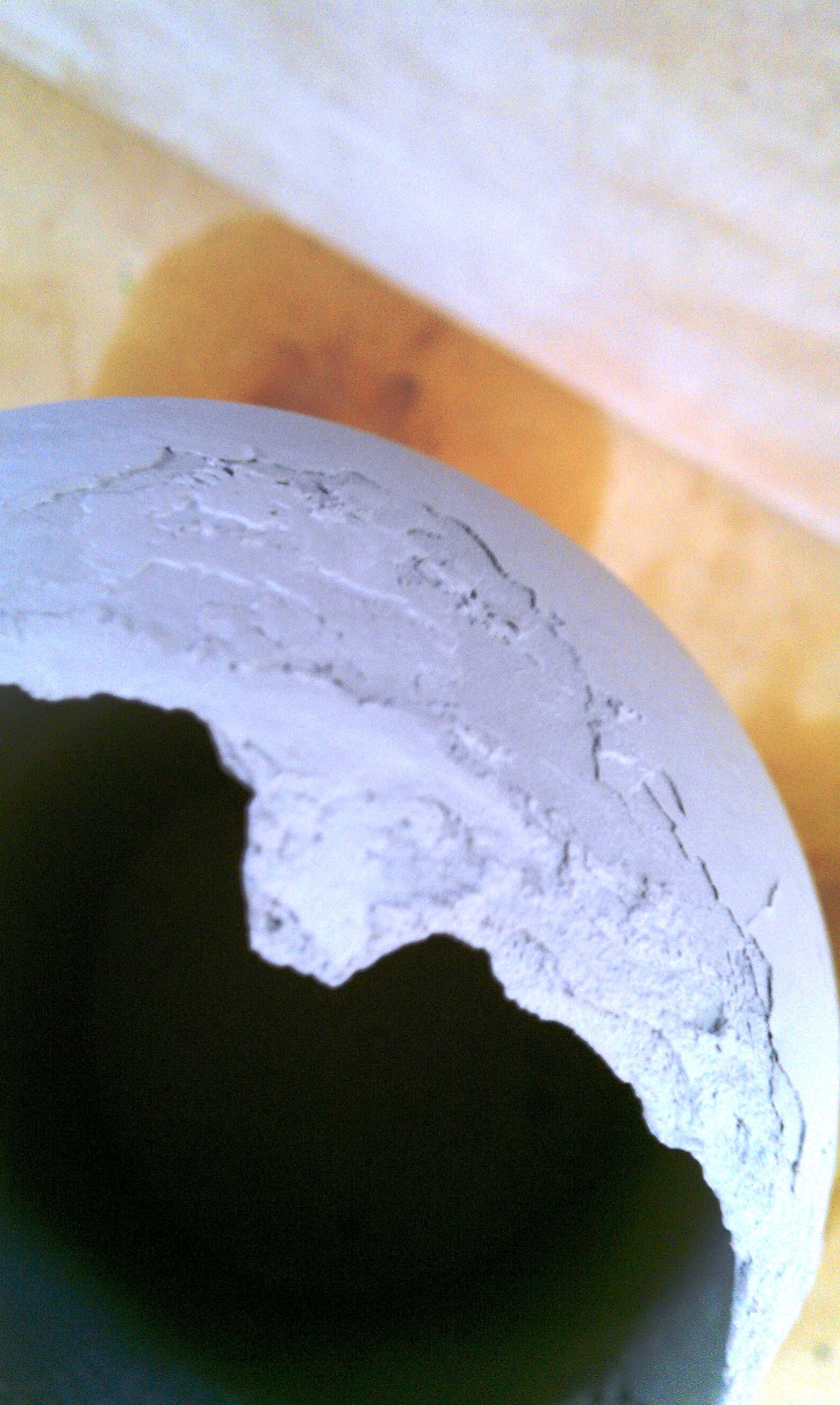
The erosion on this scale worked a lot better than before, allowing whole sections to become really deeply pitted on the surface yet not fully eroded away. I next decided that I needed to find a way to accent these. Because of the nature vs culture aspect of my work, I decided that applying a lot of red iron oxide (the colourant in naturally found cheap clays, and then sponging it off would give me the contrasts I was looking for.


This worked really well and so I decided to do it to all of my forms.

Oxides and Slip

My next step was to think of how I could get the oxides to build up on the surface enough to be able to be seen after high firing. This lead me to think of maybe using a slip so that the oxides would literally stick to the bone dry pot. I also decided to try using terracotta slip on the outside of porcelain, giving a contrast of nature and refinement.


Oxide Tests

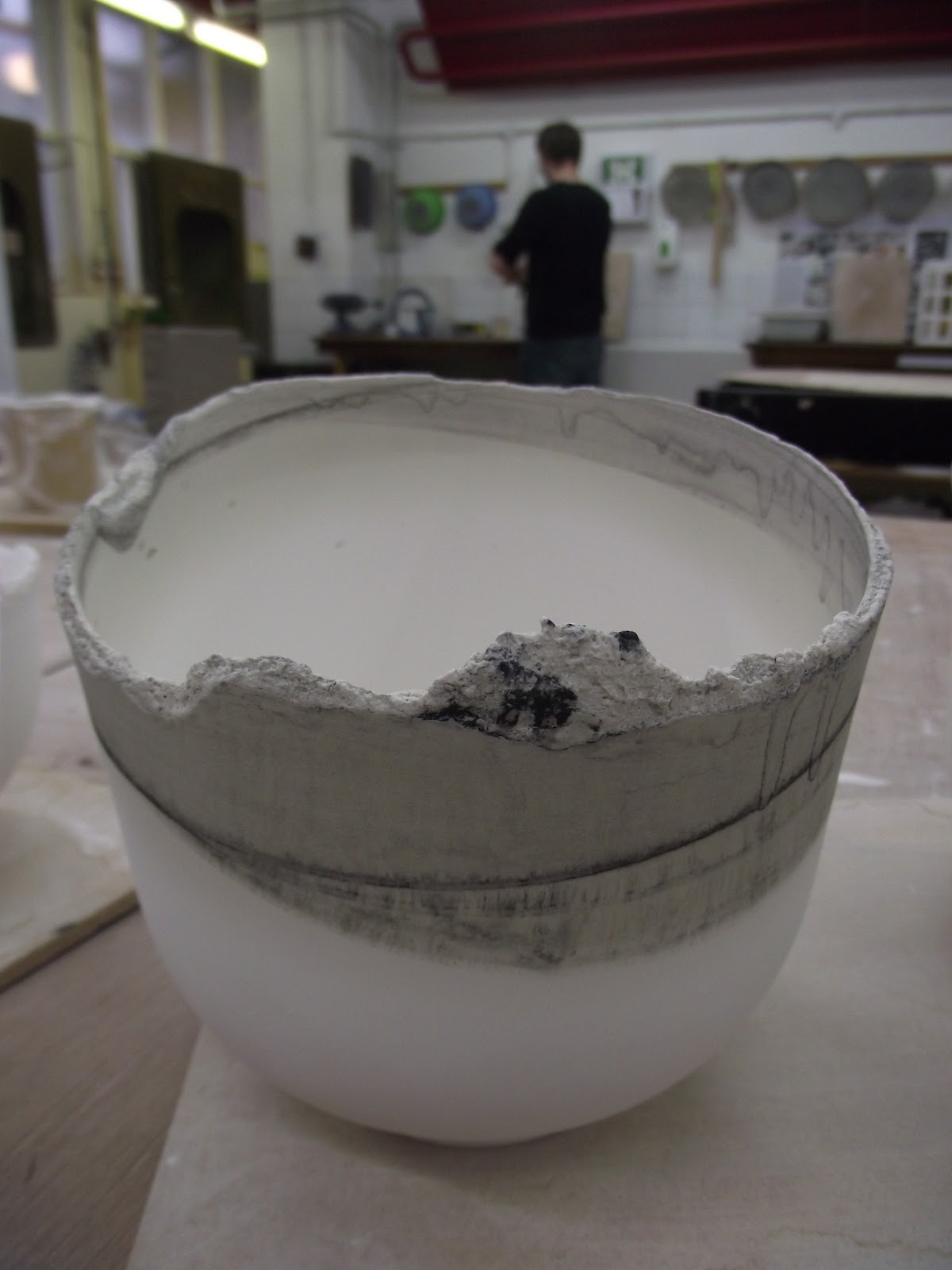
To try and accent the breakdown in the water erosion process, I decided to try putting oxides in the water during erosion. Not only would this accent the texture hopefully, but leave a residual effect of the 'tide' marks on the side of the form.


This worked really well on the un-fired pieces, however after going into the kiln they lost all colour.